
Connector & hose fixes, $100–$200
The brittle flexible connector behind the cooktop, a small part responsible for an outsized share of leaks.
Gas does not grade on a curve. A connection is either tested and certified or it is a liability with a warranty problem, so every gas job we do across Warrawee, from a cooktop swap to a full outdoor kitchen line, ends the same way: needle steady on the manometer, appliances burning blue, paperwork done.
NSW reserves every gas task, down to connecting an oven, for licensed gasfitters, and the logic is unsentimental: plumbing mistakes stain ceilings, gas mistakes burn houses and poison air. The leaks we attend have a recurring origin story, and it is rarely the pipework’s idea, it is a confident DIY connection or a handyman’s thread tape, discovered later by someone’s nose.
What the licence actually buys is the ending: the whole installation held against a manometer until the needle refuses to move, every appliance checked for a clean blue burn and honest ventilation, and the work done to AS/NZS 5601, the clause your insurer reaches for when something ever goes wrong. Across Warrawee and the Upper North Shore, no gas job of ours skips that ending.

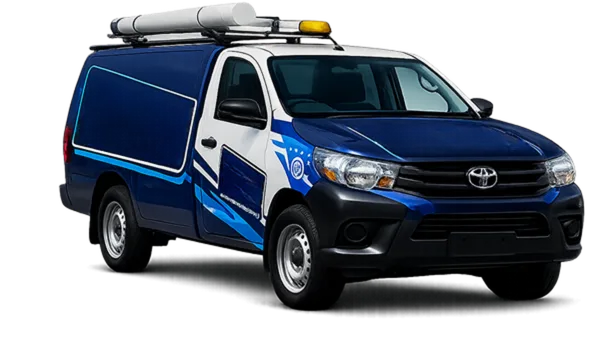
Cylinder and bulk tank installations have clearance requirements from boundaries, openings, ignition sources and vehicle paths, and those are the things most often wrong on a property where a shed or deck has been added since.
Jemena, the largest gas distributor in NSW with over 1.5 million homes and businesses connected, does not reach every street. LPG streets exist and they change the calculations, so we confirm supply type on site.
It is worth a check whenever anything is built near an existing installation. A compliant tank position can become non-compliant because something was built beside it, and that surfaces at sale time if not before.
A house usually means appliances, heaters and new runs; an apartment usually means a cooktop and a compliance question. Both sit under the same standard.
A period home was not built with gas in mind. Whatever it has was added later, often several times, and the runs take whatever route was available at the time, under floors, through cavities, along the outside of a wall and back in.
Which is why the first job on an older property is usually establishing what is actually there. A pressure test tells you whether the installation is sound; it does not tell you where it goes, and both matter before anything is added.
On a large property the run from the tank to the house, or out to a shed, a studio or a second dwelling, can be substantial, and pressure drop over distance is real.
An appliance starved at the end of a long undersized line behaves like a faulty appliance. Sizing the run correctly is the fix, and it is far cheaper to establish before the trench is closed than after.
They run at different pressures with different jets. An appliance made for one will not operate safely on the other without a proper conversion kit fitted by a licensed gasfitter.
This matters most with secondhand appliances, which is where we find it. If you are buying used, check what gas it is set up for before it arrives, conversion is sometimes possible and sometimes not.
Gasfitting is licensed work in NSW and there is no handyman tier of it. It is not bureaucratic caution, unburnt gas and incorrectly burnt gas are both lethal, and the second one is odourless.
It also has consequences beyond safety. Unlicensed gas work voids home insurance, invalidates appliance warranties, and surfaces during a sale. Every job here is done under licence and finishes with a certificate.
Before any new appliance, the question is whether the meter and the existing runs can supply it alongside everything already connected. A system sized for a cooktop and a hot water unit will not automatically carry a pool heater as well.
Where it will not, the answer is usually an upgraded meter or a resized run rather than a smaller appliance. Establishing that first avoids buying something that can never perform properly.
The brittle flexible connector behind the cooktop, a small part responsible for an outsized share of leaks.
Leaking threads and valves sealed properly and proven again under pressure.
Corroded or damaged sections replaced; concealed lines needing access run $800–$2,500.
Connected, tested, certified. Extending a line or adding a bayonet to reach it is quoted on top, fixed, first.
Sydney's 2026 licensed-gasfitter range, call-outs typically $80–$150. The certificate at the end costs nothing extra, it is the job.
Every gas job ends with a pressure test and the paperwork that proves it. Figures here are indicative of the 2026 Sydney market rather than a quote from us, you get your own number as a fixed price before any work starts.
Suspected leaks start with the supply off at the meter and air moving through the space. Diagnosis begins only after the installation stops feeding the problem.
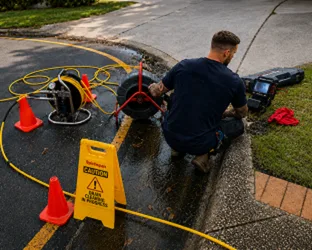
A manometer says whether the system is losing gas; detection fluid and instruments then walk the installation to the guilty joint, fitting or run.
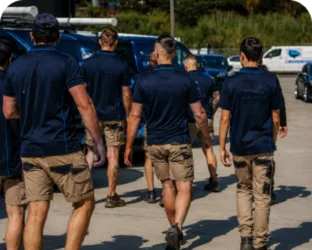
The failed component comes out and compliant material goes in, to AS/NZS 5601, whether that is one connector or metres of rerun line.
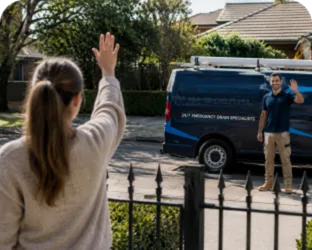
The full installation holds on the gauge or we are not done. Appliances relit, flames checked blue, ventilation confirmed, compliance documented.
Nor should it, legally. One visit: connected, tested, certified, warranty intact. The proper way is also the cheap way, counted honestly.
Licensed, pressure-tested, documented: every time. Smelling gas this minute? 131 909 from outside comes first.

Leave your details and our local Warrawee team will call you back fast.