
Reachable burst: $200–$500
Garden, garage or open wall access, cut out and repaired at daytime rates.
First we stop the water. Then we find the actual split, not just where the water shows up, which is rarely the same place, and repair it properly. On call around the clock across Warrawee and the Upper North Shore.
Pipes rarely burst without a biography. Warrawee’s older homes run copper laid generations ago, thinning quietly from the inside until mains pressure finds a weak micron; galvanised steel rusting at every thread; and renovation-era junctions where old metal meets nineties plastic meets modern PEX, each connection a wager against time. High street pressure across parts of the Upper North Shore settles those wagers early.
Then the water lies to you about the address. It runs the outside of the pipe, follows timber, and surfaces metres downhill of the failure: which is why opening the ceiling under the stain finds wet plaster and nothing to fix. We refuse to guess: the line is traced with listening gear, thermal imaging and section pressure testing, the failed piece is cut out, and the repair proves itself on a gauge before the plaster goes back on.


Warrawee’s heritage homes often still run decades-old clay pipes that crack and shift with age, letting roots and debris in and slowing every drain on the property.
Most heritage-era houses are a layered record of every plumber who has worked on them: original galvanised in the untouched parts, copper from a seventies bathroom, and modern pex from whatever was done last.
That matters because a burst tells you about one section, not the house. We will say which era failed and whether the rest of that era is still in service, which is the difference between a repair and an informed decision about the next five years.
Not every escape of water is a burst pressure pipe. A cracked or collapsed drain leaks too, slowly, without a pressure drop, and often for months before anything shows.
The distinction matters because the repairs are different jobs at different prices. A pressure leak shows on the meter with every tap closed; a drain fault does not, and it is found with a camera rather than a listening device.
Warrawee is a small, exclusive pocket of Sydney’s Upper North Shore (postcode 2074), tucked between Turramurra and Wahroonga along the rail line. It’s known for big leafy blocks, gracious heritage homes and quiet tree-lined streets off the Pacific Highway, and all that greenery means plenty of work for its ageing drains, ground we know well.
Homes plumbed before the 1960s were run in galvanised steel, which corrodes from the inside out. The wall thins invisibly for decades while the bore narrows with rust, so the first symptom is usually poor pressure rather than a leak.
When it finally goes, it goes at the thinnest point rather than the most convenient one. If your pressure has been declining and the water runs brown after the house has sat empty, that is the pipe telling you what it is made of.
A cracked earthenware line under the yard can lose water into the ground indefinitely without a single visible symptom. The soil takes it, the grass over it looks slightly better than the rest, and nothing backs up because the line still flows.
The damage is not the lost water, it is what saturated ground does to footings and to the bedding under the pipe itself. A line leaking into its own trench undermines its own support, which is how a crack becomes a sag and then a collapse.
Water off at the meter. If it has reached outlets, appliances or a switchboard, kill that circuit before going near it. Move what you can lift, and put a bucket under an active drip rather than a towel.
Then photograph it, the water, the damage, and the time. Two minutes of pictures before anything is cleaned up is worth more to a claim than anything anyone can reconstruct afterwards.
A bill that has risen with no change in the household is the most common way a concealed leak is discovered, and by then it has usually been running a full quarter.
Sydney Water's own comparison of your usage against previous periods is the easiest check available. A steady climb across two bills, with no new occupants and no new garden, is a leak until proven otherwise.
A serious water leak is an urgent repair under NSW residential tenancy law. The landlord or agent is obliged to arrange it promptly, and your first call is to them.
If they cannot be reached and water is actively causing damage, tenants may arrange urgent repairs up to a legislated limit and seek reimbursement. Isolate the water, keep the invoice, and record your attempts to contact them: we timestamp ours.
Garden, garage or open wall access, cut out and repaired at daytime rates.
Wall and ceiling repairs, including the tracing that keeps the access hole singular and small.
Locating gear plus concrete or excavation access: or a smarter reroute around the lot.
Roughly $180–$250/hr versus $120–$160 daytime, plus attendance. Meter off + morning booking is sometimes the clever play; we will say so.
Professional leak detection's first hour. Cheaper than the second exploratory hole, let alone the third.
Every repair is pressure-tested before we leave, and the workmanship carries a lifetime warranty. Figures here are indicative of the 2026 Sydney market rather than a quote from us, you get your own number as a fixed price before any work starts.
On the phone: meter valve, clockwise, done: the flooding stops before we have left the depot. On site, we isolate just the affected line where possible so the rest of the house stays on.
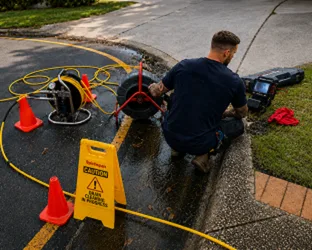
Water surfaces downhill of the failure, so we trace: acoustic gear, thermal imaging or pressure testing for concealed lines, before anything is opened up.

The failed section is cut out and replaced, not bandaged. If what we expose says the whole run is at end of life, you get that assessment straight, with numbers for both paths.
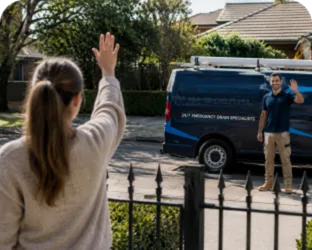
Pressure-tested against the mains before any wall, floor or trench is closed. You see it holding before we leave.
Shut the meter valve, then call. We will talk you through making it safe while a crew heads your way.
Traced with instruments, repaired once, proven under pressure: and priced before any of it starts.

Leave your details and our local Warrawee team will call you back fast.